
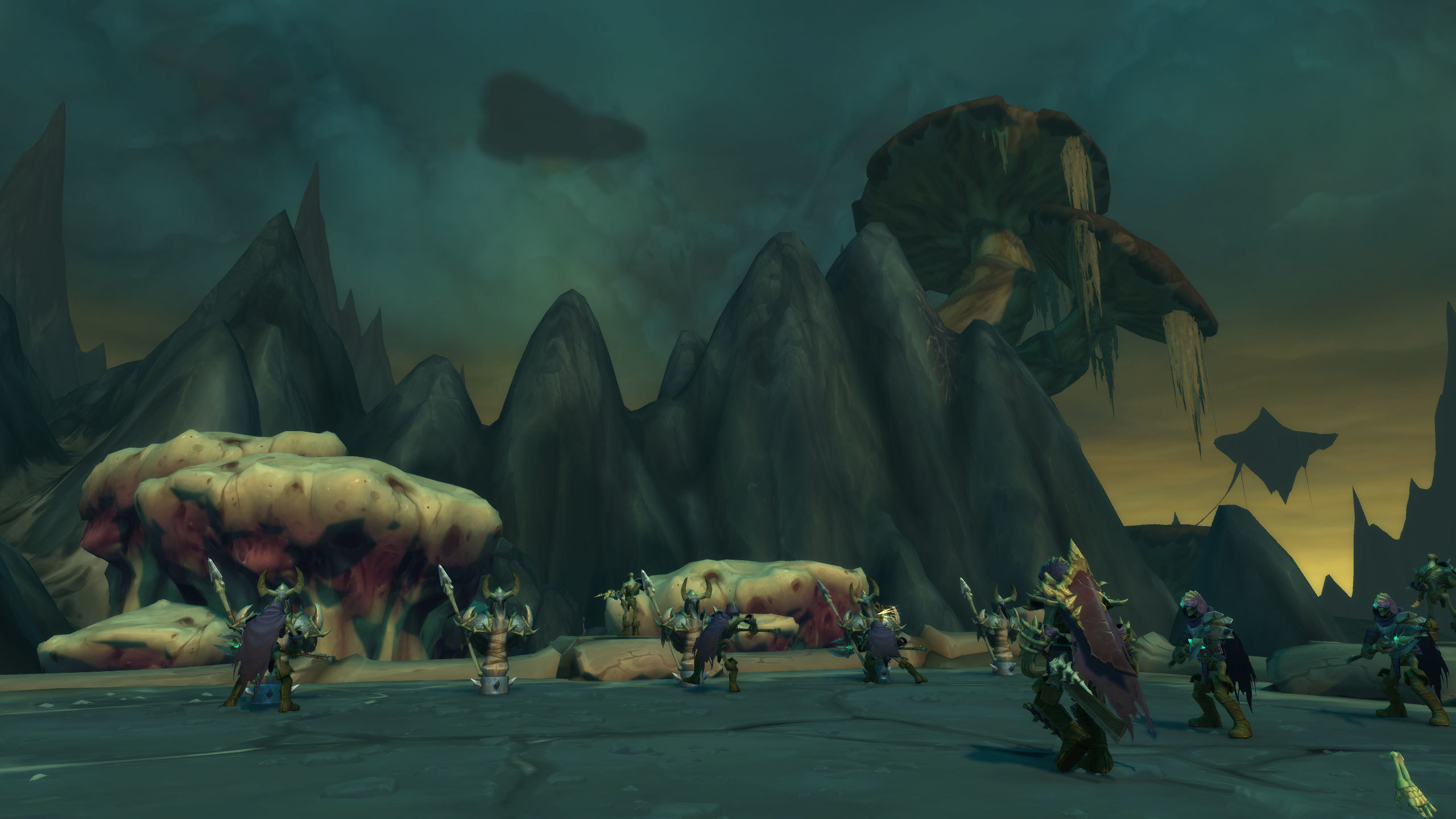

For years, death existed as a narrative boundary — a force that shaped stories but remained distant and mysterious. The Shadowlands expansion changed everything by pulling back the veil and revealing the afterlife as a structured realm filled with purpose, politics, and cosmic responsibility. Instead of treating death as an ending, the game reframed it as a continuation shaped by judgment, identity, and the weight of a lifetime’s choices. This shift redefined how players interpreted mortality within the universe and reshaped emotional connections to characters whose stories once ended at the moment of death.
This article explores how the expansion’s afterlife lore changed the way players understand death, revealing new layers of meaning in the journeys taken by souls.

An Afterlife With Structure and Intention
The Shadowlands introduced an afterlife governed by cosmic order rather than chaos. The realms of Bastion, Ardenweald, Maldraxxus, and Revendreth represented different paths a soul might take, each shaped by values and purpose. The revelation that every soul undergoes a personalized journey added emotional depth to the concept of death. Instead of remaining a distant mystery, the afterlife became a place with rules, responsibilities, and consequences — a realm where identity continued rather than dissolved.
Death became a landscape instead of a void, full of stories waiting to unfold.
Characters Reimagined Through Death
By exploring the afterlife, the expansion allowed familiar characters to reappear with new emotional context. Heroes faced unresolved regrets; villains confronted the legacy of their choices. Souls who once seemed irredeemable revealed unexpected depth. These storylines transformed death from a final chapter into an opportunity for reflection, closure, or transformation. Characters gained agency even in death, reshaping how players interpreted their past actions and future potential.

To highlight these transformations, here are notable examples of afterlife reinterpretations:
- Uther confronting the pain of vengeance and betrayal
- Arthas reduced to a shadow of consequence rather than a tyrant
- Draka finding renewed purpose as a warrior of Maldraxxus
- Kael’thas seeking redemption after a lifetime of pride and downfall
- Tyrande’s journey reflecting grief, fury, and eventual restoration
Death as a Mirror of Emotion and Legacy
The Shadowlands framed death as a continuation of personal identity. Souls carried memories, regrets, strengths, and flaws with them. This approach encouraged players to see mortality through a more nuanced lens. Instead of viewing death solely as an end to a character arc, players witnessed how legacy shapes what comes after. The afterlife became a mirror — reflecting the emotional weight of decisions made in life and the lingering impact they have on the world.
This shift deepened the emotional resonance of storylines tied to sacrifice, loss, and destiny.
The Moral Complexity of Judgment
The expansion also forced players to reconsider justice within the universe. The process by which souls were judged, assigned purpose, or punished brought ethical questions to the forefront. Was a soul’s fate determined fairly? How much did circumstance influence destiny? By exploring these philosophical tensions, the expansion invited players to think critically about consequences that extend beyond life.

Judgment became a narrative force rather than a simple mechanic.
A Universe Forever Changed by What Lies Beyond
The afterlife’s structure revealed that death had always been intertwined with cosmic events shaping the world. From the imbalance of anima to the impending collapse of the cycle, players saw death not as passive but as a living force influencing the fate of the universe. This revelation shifted how future stories might unfold, opening paths for characters whose destinies extend beyond mortality itself.
Death became a continuation of the world’s story rather than a boundary preventing its growth.
Conclusion

By giving form to the afterlife, the Shadowlands expansion changed how players see death in the world. Mortality became a narrative journey shaped by purpose, identity, and consequence. Characters continued to evolve, societies endured beyond life, and the emotional weight of death became richer and more complex. The afterlife is no longer a distant concept — it is a realm intertwined with the living world, reshaping how stories end, how they begin, and how they are remembered.